The "Strategy" Playbook: Why small enterprises in 2026 Need More Than Just Ads
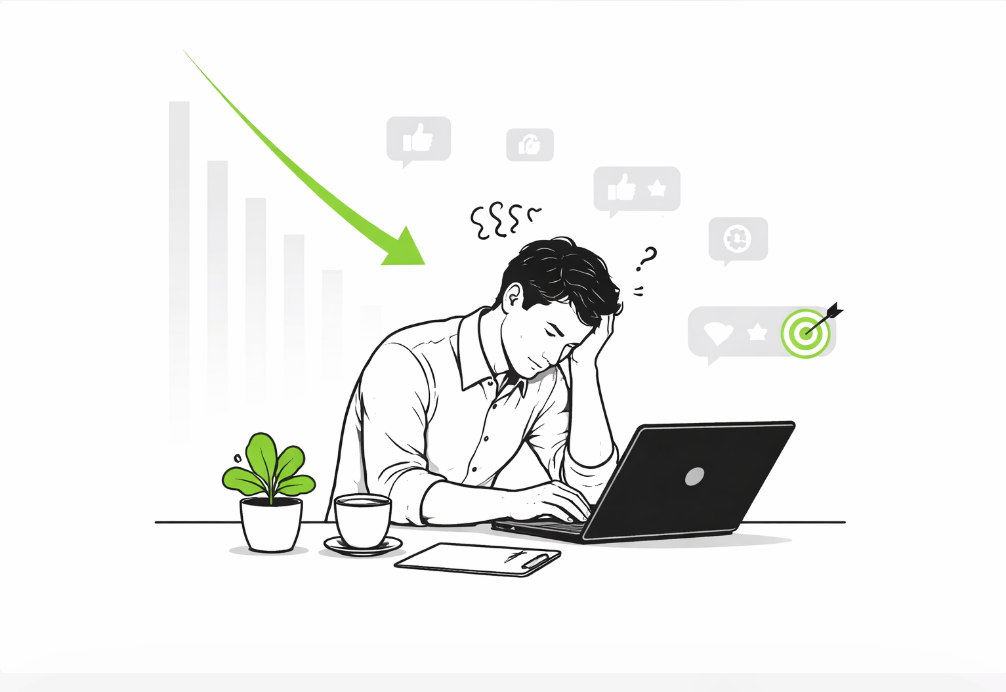
In the noisy digital landscape of 2026, Many Small and Medium Enterprises (SMEs) and product companies fall into the trap of equating "growth" with "advertising spend." While performance marketing remains a vital component of any successful business, a sustainable Go-to-Market (GTM) strategy requires a more structured approach.
At Salhurry, we have observed that the Successful companies today are shifting toward a strategy-first Go-to-Market (GTM) model, where marketing campaigns are built on top of a strong growth funnel rather than acting as the starting point. Instead of asking “Which ads should we run?”, these companies ask deeper questions:
- Who exactly are we targeting?
- What unique value do we provide?
- How do we structure the journey from discovery to purchase?
- What system converts attention into predictable revenue?
The Shift from "More Ads" to "Better Systems"
The usual model of simply increasing ad budgets to drive traffic is becoming increasingly inefficient. With rising customer acquisition costs (CAC) and a more selective audience, SMEs must transition toward a Growth System approach. This involves a deep dive into positioning frameworks, offer engineering, and funnel mapping. By establishing a clear revenue roadmap, businesses can ensure that every marketing dollar spent is aligned with a long-term scalability goal.
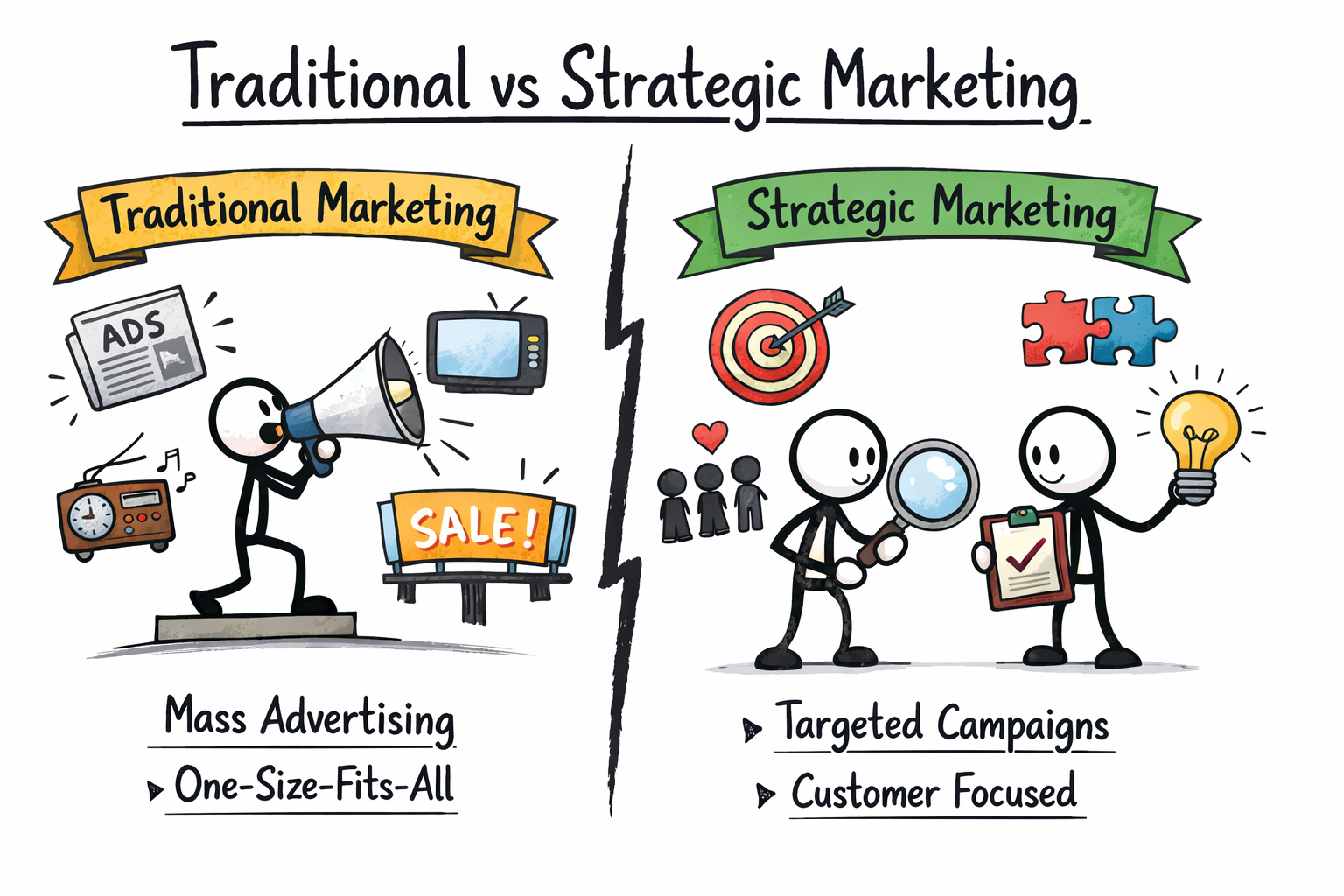
A Growth System focuses on building a structured framework that aligns marketing, sales, product experience, and content strategy into a unified engine. Instead of isolated campaigns, every activity supports a clear revenue pathway.
This includes:
- Positioning frameworks that clearly communicate the value of a product
- Offer engineering that makes the buying decision easier for customers
- Funnel mapping that guides prospects from awareness to conversion
- Content ecosystems that continuously educate and attract new users
Instead of chasing short term spikes in traffic, businesses build a repeatable mechanism for acquiring and converting customers.
Core Pillars of a Winning GTM Strategy for 2026
For product companies looking to educate new users and drive organic traffic, a winning GTM strategy should be built upon three essential pillars:
1.Positioning and Offer Engineering:
Before launching campaigns or creating content, businesses must first answer a fundamental question:
Why should customers choose your product over the alternatives?
Positioning defines how your product is perceived in the market. Without clear positioning, even the most well-funded marketing campaigns struggle to convert because the value proposition is unclear.
Strong positioning focuses on:
- Identifying a specific problem faced by the target audience
- Communicating how your product solves it differently
- Highlighting clear and measurable outcomes for the customer
Once positioning is clear, the next step is offer engineering.
Offer engineering involves structuring the product or service in a way that reduces friction and increases perceived value. This might include:
- Creating entry-level offers or trials
- Bundling complementary features
- Designing pricing structures aligned with customer needs
- Adding guarantees or onboarding support
An engineered offer removes hesitation and makes it easier for prospects to take the next step.
2.Integrated Content Ecosystems:
Buyers rarely make decisions based on a single advertisement. Instead, they conduct research, compare options, and consume multiple pieces of information before committing to a purchase.
This is where educational content becomes essential.
Content ecosystems allow businesses to attract, educate, and nurture potential customers through valuable information. Rather than directly selling at every interaction, brands provide insights that help the audience understand their problem and potential solutions.
Effective content ecosystems often include:
- Educational blog posts
- Case studies that show outcomes
- Guides and playbooks that solve industry challenges
- Explainer videos and tutorials
- Community discussions and insights
This approach offers two major advantages.
First, it builds trust and credibility. When businesses consistently provide valuable insights, they position themselves as authorities in their industry.
Second, it improves organic visibility through search engines. High-quality educational content helps companies attract prospects who are already searching for solutions, creating a steady stream of inbound traffic.
Over time, a strong content ecosystem becomes one of the most powerful long-term growth assets a company can build.
3.Hybrid PLG and Human Touch:
Product-Led Growth (PLG) has become one of the most influential growth models in recent years. In a PLG model, the product itself becomes the primary driver of user acquisition and adoption. Free trials, freemium versions, and self-serve onboarding allow users to experience the value of the product before committing to a purchase.
However, for many SMEs, relying purely on automated systems can limit conversion potential.
This is where a hybrid approach becomes leverage.
A hybrid GTM strategy combines the scalability of PLG with the effectiveness of human interaction. Automation handles discovery and initial engagement, while personalized support helps users move toward deeper adoption.
Examples include:
- Personalized onboarding support for trial users
- Sales conversations for high-value prospects
- Community engagement and user groups
- Customer success teams that help users achieve outcomes
This balance ensures that businesses maintain efficiency while still delivering meaningful human interaction when it matters most.
Building for Scalable Growth
Scaling a business in competitive markets requires more than tactical marketing efforts. It requires a clear system that aligns strategy, messaging, and customer experience.
Businesses that invest time in building strong GTM foundations often experience several long-term benefits:
- Lower customer acquisition costs
- Higher conversion rates
- Stronger brand authority
- More predictable revenue growth
Instead of chasing short-term spikes in traffic or leads, these companies create growth engines that continue to generate results over time.
As markets become more competitive, businesses that rely only on ads will struggle to stand out.
"Growth is not just about being everywhere; it is about being exactly where your customer spends their time with a message that resonates."
Those that build structured GTM systems, however, will be positioned to capture attention, convert customers, and scale sustainably.

Kasinathan
GTM strategist